Meet the Founder
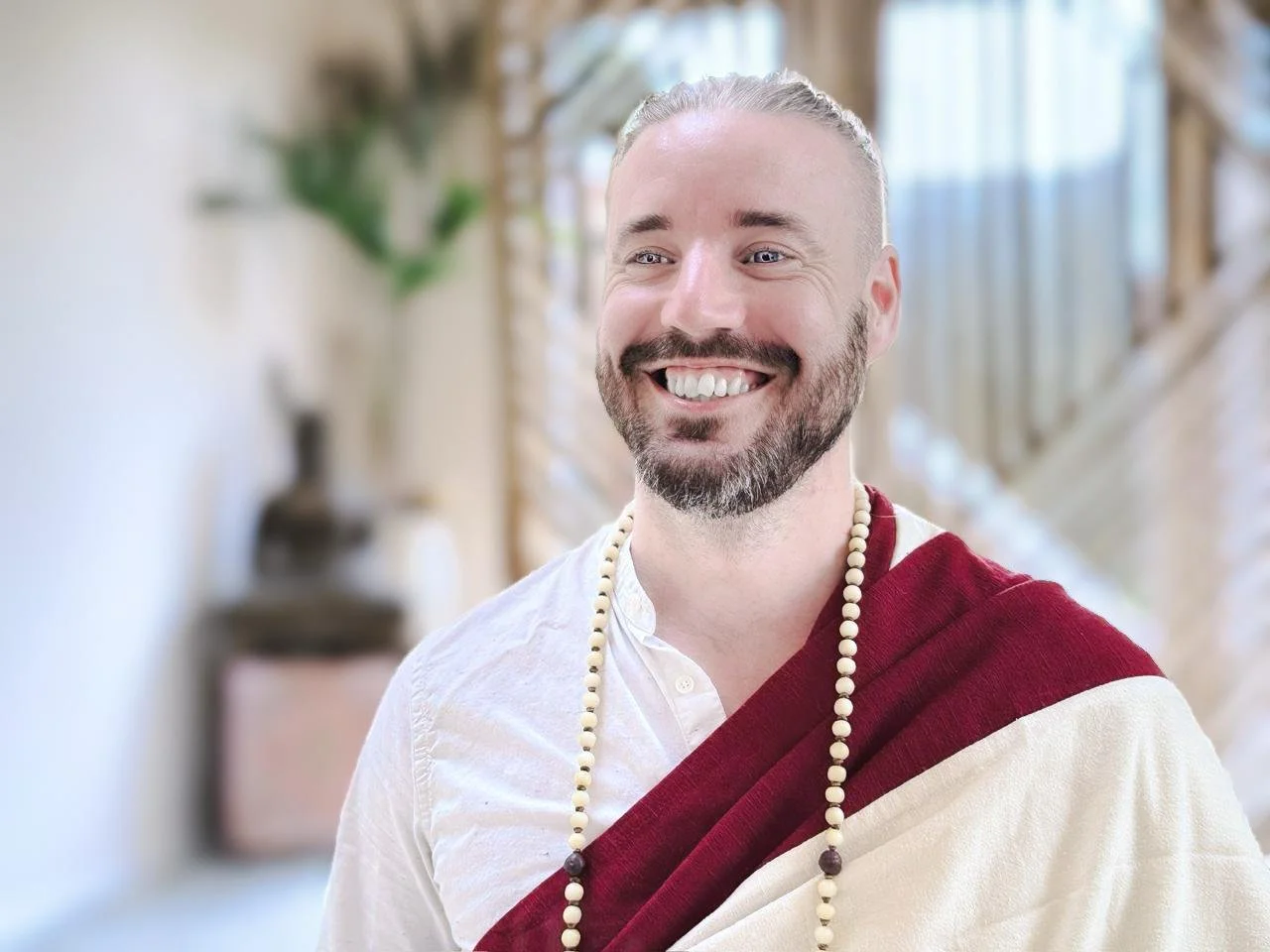
Martijn Schirp has spent more than a decade working professionally at the intersection of psychedelics, contemplative practice, transformation, and culture. Over those years, he came to see both the extraordinary promise of sacramental experiences and the limits of experience alone.
He watched these experiences open people profoundly—and saw how quickly those openings could close again without something capable of holding, clarifying, and deepening them. He also witnessed how sincere intentions could become entangled with spiritual inflation, ethical blind spots, bypassing, misuse of power, and egoic extraction when they were not grounded in sustained practice and strong containers.
His own orientation changed alongside this. What began as a broad exploration of transformative practices gradually became a deeper commitment to spiritual path: to lineage, ethical discipline, philosophy, devotion, community, responsibility, and the patient work of examining conditioning that even extraordinary experiences do not simply erase.
This also brought with it an increasing appreciation for precision in spiritual practice. The Buddhist traditions have spent centuries developing exceptionally rigorous ways of investigating mind, perception, suffering, ethics, and liberation. They distinguish carefully between temporary states and genuine insight, between insight and realization, between experiences that feel liberating and the recognition and uprooting of the causes of suffering themselves. For Martijn, this philosophical and contemplative rigor has become indispensable. Psychedelics may reveal extraordinary possibilities, but they do not by themselves tell us what is true, what is wholesome, what constitutes liberation, or how an insight should be embodied when the experience has passed.
This is part of why he created Upāyosis.
Upāyosis begins from the conviction that sacramental practice should be approached as genuinely sacred: with reverence, humility, ritual competence, ethical responsibility, discernment, ongoing relationship, and commitment. Rather than treating psychedelics as shortcuts, isolated interventions, or experiences to be accumulated, it explores how they might function as upāya—skillful means held within a much larger path of awakening.
At the heart of that path is the bodhisattva ideal. Liberation must not end with a private experience of freedom. Practice should gradually transform how we relate to other people, to power, to suffering, and to the living world of which we are a part. In a time of ecological, social, and spiritual crisis, a path that remains confined to individual healing or self-development risks reproducing the same individualism from which much of our alienation and confusion arises.
The aspiration of Upāyosis is therefore not simply to help people have profound experiences, even though these are clearly important, but to support the development of clearer, wiser, more compassionate, and more trustworthy human beings—people increasingly capable of responding skillfully to suffering and contributing to the flourishing of life around them.
Martijn has an academic background in interdisciplinary science and philosophy and has practiced Buddhism for approximately fifteen years across several traditions and lineages, including Burmese Theravāda, Zen, and Dzogchen. He is now primarily dedicated student and practitioner within the Vajrayāna tradition.
Martijn has also completed the two-year Vajrayana Spiritual Care Foundations training under Lama Justin von Bujdoss, comprising 316 hours of formation in Vajrayāna Buddhism and community-based clinical caregiving. This has deepened the pastoral and relational dimensions of his contemplative work alongside his ongoing practice and study.
His role in A Path Between Worlds is that of a spiritual companion and facilitator: a fellow practitioner bringing a passion for contemplative inquiry, Buddhist philosophy, ethical reflection, and the careful integration of sacramental experience with sustained practice. His work remains informed by regular consultation with qualified teachers, continuing study, supervised practice development, and his own ongoing commitment to the path.
Before founding Upāyosis, Martijn co-founded Synthesis, where he helped develop one of the first legal psychedelic wellness centers in the world and co-created the Synthesis Psychedelic Practitioner Training. Earlier, he co-founded HighExistence and Apotheosis, creating and curating transformational experiences at the intersection of spirituality, ecology, philosophy, and culture.
Across these projects, one question has become increasingly central for him:
How do practice, study, and transformative experiences truly become a genuine transformative way of life?
A Path Between Worlds is one response to that question: an attempt to bring contemplative training, Buddhist philosophy, ethical formation, sacramental practice, and ecological responsibility into a coherent path—one concerned not merely with altered states, but with learning to see more clearly, live more wisely, and place whatever freedom we discover in service of others.
Martijn’s principal and beloved teachers on the Buddhist path are listed below. Their teachings have profoundly shaped his understanding of mind, perception, ethics, wisdom, compassion, and liberation. Their inclusion here is purely biographical and should not be understood as an endorsement of psychedelic or sacramental practice.
Interested in learning more about A Path Between Worlds? Please feel welcome to book a conversation.
Primary Teachers
-
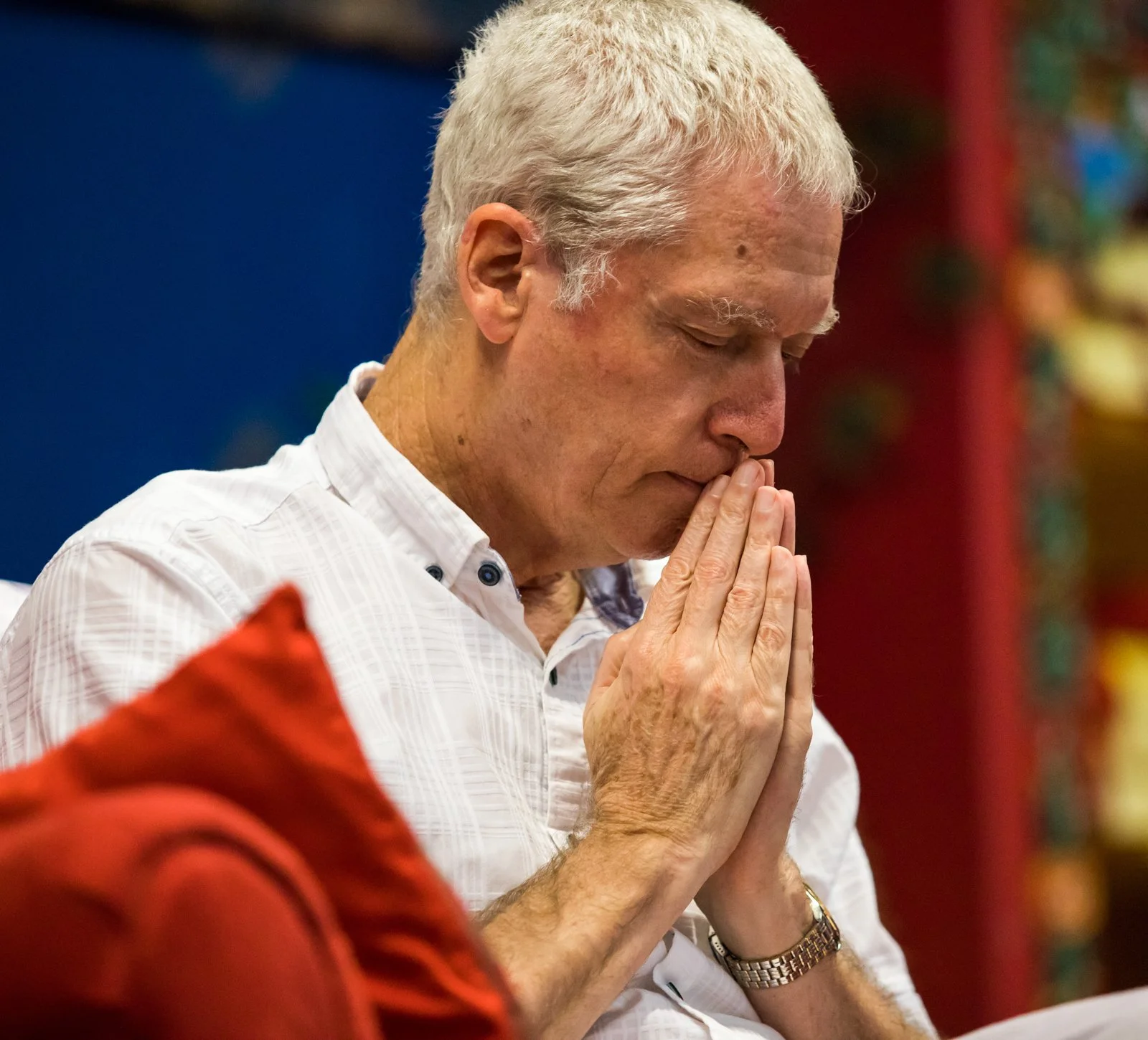
Lama Alan B. Wallace
Alan B. Wallace, PhD, is a renowned scholar-practitioner who has spent nearly five decades weaving Tibetan Buddhist contemplative training together with cutting-edge cognitive science. Ordained by H.H. the Dalai Lama in 1975, he later earned degrees in physics and religious studies (Amherst; Stanford) and went on to found both the Santa Barbara Institute for Consciousness Studies and the Center for Contemplative Research, hubs for rigorous dialogue between first-person meditation and third-person science. A prolific author of forty-plus books—including The Attention Revolution and Contemplative Science—Wallace has guided thousands in samatha-vipashyanā and Dzogchen retreats worldwide and currently leads the long-term retreat community at Miyo Samten Ling in Colorado.
-
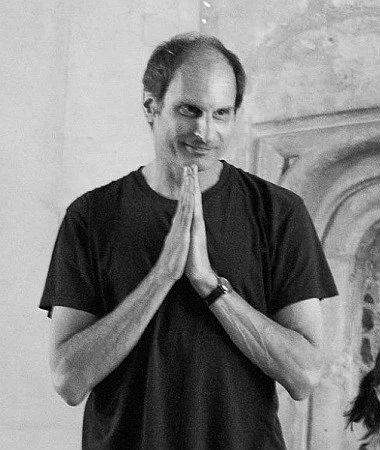
Rob Burbea
Rob Burbea (1965 – 2020) was a British meditation teacher celebrated for the depth and originality with which he explored emptiness, dependent arising, and the imaginal in what he came to call “Soulmaking Dharma.” A classically trained jazz guitarist who studied at Berklee College of Music and the New England Conservatory, he later became resident teacher at Gaia House (2005-2015), where he guided long retreats and co-founded engaged-dharma initiatives such as SanghaSeva and the Dharma Action Network for Climate Engagement. His seminal book Seeing That Frees (2014) continues to shape contemporary insight practice and forms a cornerstone of the Upāyosis path. -
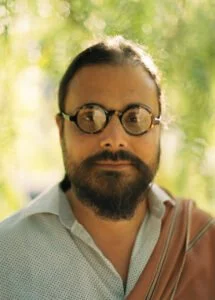
Lama Justin von Bujdoss
Lama Justin von Bujdoss (Repa Dorje Ödzer) is an American Karma Kagyu Vajrayana teacher and chaplain ordained as a repa—a lay tantric yogin—by H.E. Goshir Gyaltsab Rinpoche. He is the author of Modern Tantric Buddhism, co-founded the experimental sangha Bhumisparsha with Lama Rod Owens, directed chaplaincy and staff wellness for the NYC Department of Correction, and now guides dark-retreat practice at the Yangti Yoga Retreat Center he founded in Massachusetts.